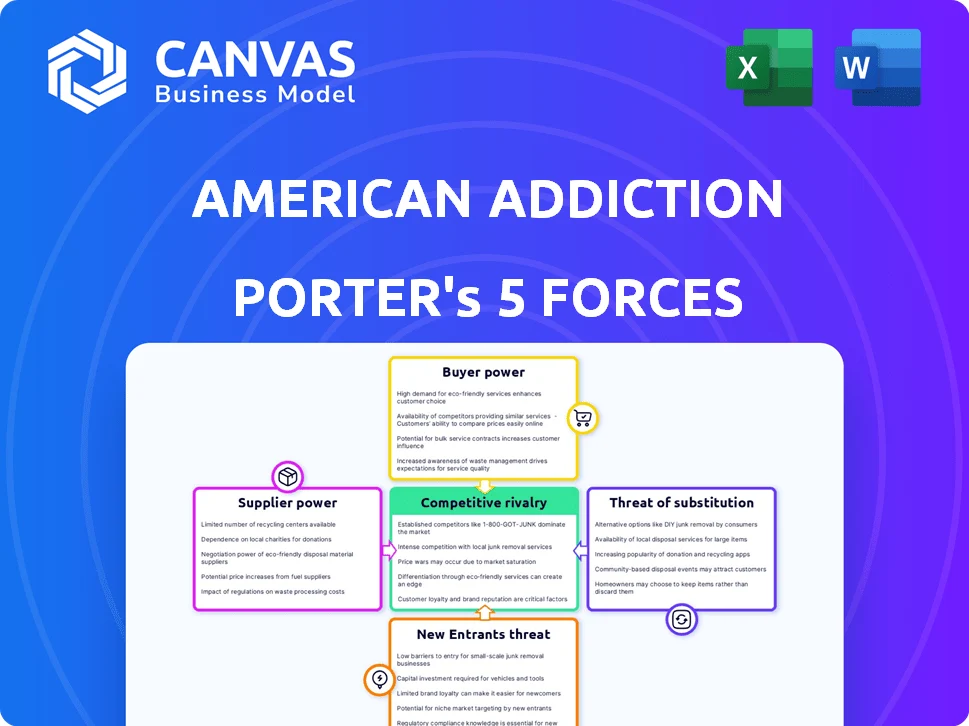
AMERICAN ADDICTION CENTERS PORTER'S FIVE FORCES TEMPLATE RESEARCH
What is included in the product
 Detailed Word Document
Analyzes competitive forces impacting American Addiction Centers, including rivals, buyers, and potential entrants.

 Customizable Excel Spreadsheet
Customize pressure levels based on new data to reflect current business conditions.
What You See Is What You Get
American Addiction Centers Porter's Five Forces Analysis
This preview presents the complete American Addiction Centers Porter's Five Forces analysis. You'll receive this exact, fully-formatted document instantly upon purchase. It offers an in-depth look at industry competition. This detailed analysis is ready for your immediate download and use.

Porter's Five Forces Analysis Template

Elevate Your Analysis with the Complete Porter's Five Forces Analysis
American Addiction Centers faces moderate rivalry, fueled by numerous treatment providers. Buyer power is relatively low due to the specialized nature of care. The threat of new entrants is moderate, depending on regulatory barriers and capital requirements. Supplier power, including medical professionals, exerts some influence. Substitutes, like outpatient programs, pose a limited but existing threat.
Ready to move beyond the basics? Get a full strategic breakdown of American Addiction Centers’s market position, competitive intensity, and external threats—all in one powerful analysis.
Suppliers Bargaining Power

Limited Number of Specialized Professionals
The addiction treatment sector depends on specialized professionals like therapists and counselors. A limited supply of these experts grants them bargaining power, affecting operational costs. In 2024, the average therapist's salary was around $80,000, reflecting this dynamic. High demand and specialized skills allow professionals to negotiate better compensation packages.
Dependence on Pharmaceutical Suppliers
American Addiction Centers' (AAC) treatment protocols, including Medication-Assisted Treatment (MAT), rely heavily on pharmaceutical suppliers. These suppliers possess some bargaining power, particularly when preferred or essential medications are involved. In 2024, the U.S. pharmaceutical market reached approximately $650 billion, highlighting the industry's significant influence. AAC must navigate these supplier relationships carefully to manage costs and ensure access to vital medications. The leverage of suppliers can impact AAC's profitability and treatment options.

Accreditation and Licensing Bodies
Accreditation and licensing bodies significantly influence treatment centers. Compliance with their standards is vital for operational legitimacy and public trust. These bodies, like the Joint Commission, wield considerable power over addiction treatment providers. In 2024, maintaining accreditation cost centers around $20,000 annually, impacting operational budgets.

Technology and Equipment Providers
Technology and equipment providers hold some sway in addiction treatment, especially for centers using advanced tech. The market for specialized therapy software and monitoring systems is growing. In 2024, the healthcare IT market is valued at over $200 billion. This includes addiction treatment tech.
- Market Growth: The healthcare IT market is growing.
- Specialized Equipment: Suppliers of advanced tech have some power.
- Financial Data: Centers using cutting-edge tech may have higher costs.
- Market Size: The global addiction treatment market is projected to reach $47 billion by 2028.
Real Estate and Facility Management Services
For American Addiction Centers (AAC), the bargaining power of suppliers in real estate and facility management significantly impacts operations. In 2024, the real estate market, especially in prime locations for residential treatment centers, saw increased competition, potentially raising costs. Facility management services, including maintenance and security, are also critical, and their pricing can affect AAC's profitability. The ability to negotiate with these suppliers directly influences operational expenses and service quality.
- Real estate costs in desirable areas can be 10-20% higher in 2024.
- Facility management service rates increased by 5-10% due to inflation.
- AAC must carefully manage these supplier relationships to control costs.
Supplier Dynamics: Impacting Costs
American Addiction Centers faces supplier bargaining power across various fronts. Pharmaceutical suppliers, especially for crucial medications, hold considerable influence. In 2024, the pharmaceutical market's impact on operational costs was significant. Real estate and facility management also influence costs, particularly in competitive markets.
| Supplier Type | Bargaining Power | 2024 Impact |
|---|---|---|
| Pharmaceuticals | Moderate to High | Affects medication costs, impacting treatment expenses. |
| Real Estate | Moderate | Higher costs in prime locations, affecting operational budgets. |
| Facility Management | Moderate | Influences service quality and operational expenses. |
Customers Bargaining Power

Increased Awareness and Treatment Options
Customer bargaining power at American Addiction Centers is amplified by rising awareness of addiction and diverse treatment options. In 2024, the Substance Abuse and Mental Health Services Administration reported over 20 million Americans needed substance use treatment. Patients and families can now research and compare facilities, increasing their leverage. This competition among providers further empowers customers, impacting pricing and service quality.
Influence of Insurance Providers
Insurance providers significantly influence addiction treatment centers as primary payers. In 2024, about 60% of addiction treatment costs were covered by insurance. Their control over coverage, reimbursement rates, and pre-authorization requirements impacts treatment centers' revenue. This power affects service pricing and treatment accessibility. Reimbursement rates can vary widely, from $150 to $500+ per day, influencing profitability.

Patient Reviews and Reputation
In 2024, online reviews heavily shape decisions. Positive feedback boosts reputations, attracting clients. Negative reviews, however, can decrease new clients. This gives patients collective bargaining power. Patient satisfaction scores are crucial.

Availability of Multiple Treatment Centers
The availability of numerous treatment centers significantly boosts customer bargaining power. Clients can compare services, costs, and treatment approaches, enhancing their ability to negotiate or select the most suitable option. This competitive landscape compels centers to offer better value and services to attract and retain clients. For instance, the American Addiction Centers (AAC) operates a network of facilities, competing with numerous other providers. In 2024, the addiction treatment market saw over 14,000 facilities, intensifying competition.
- Market Competition: Over 14,000 addiction treatment facilities in 2024.
- Customer Choice: Clients can choose based on cost, services, and location.
- Provider Pressure: Centers must offer competitive pricing and quality.
- Negotiation: Customers can negotiate or switch to better options.
Severity of Addiction and Urgency of Need
The bargaining power of customers in addiction treatment is nuanced. While options and information are growing, the critical nature of addiction often curtails extensive comparison shopping. Individuals in crisis may prioritize immediate access over price, reducing their negotiating leverage. In 2024, the American Addiction Centers (AAC) faced both challenges and opportunities from customer dynamics.
- Crisis intervention often limits consumer choice.
- AAC's revenue in 2024 was impacted by these factors.
- The severity of addiction influences treatment decisions.
- Customer power is a key factor in AAC's market strategy.
Addiction Treatment: How Much Power Do Patients Have?
Customer bargaining power in addiction treatment is influenced by factors like awareness and treatment options. The market's competitive landscape, with over 14,000 facilities in 2024, allows for comparison and choice. However, the urgency of addiction can sometimes limit extensive price shopping, impacting negotiation.
| Factor | Impact | 2024 Data |
|---|---|---|
| Treatment Options | Increased choices | Over 14,000 facilities |
| Insurance Coverage | Influences affordability | ~60% costs covered |
| Urgency of Need | Limits comparison | Crisis-driven decisions |
Rivalry Among Competitors

Fragmented Market with Diverse Providers
The addiction treatment market is highly competitive due to numerous providers. This includes for-profit entities like American Addiction Centers (AAC), non-profits, and government programs. This fragmentation intensifies the competition for patients, driving marketing and service differentiation. In 2024, the market saw over 14,000 rehab facilities. AAC's Q3 2024 revenue was $106.4 million, reflecting this competitive landscape.
Competition Based on Services and Specializations
American Addiction Centers (AAC) faces competition based on services and specializations. Treatment centers differentiate via services, specializations, and program reputation. AAC offers diverse programs, including detox and mental health services. In 2024, the addiction treatment market was valued at approximately $42 billion.

Marketing and Online Presence
Competition is fierce in marketing and online presence. American Addiction Centers (AAC) and its rivals spend significantly on digital marketing and SEO. AAC's marketing expenses in 2023 were around $80 million. Effective online visibility is crucial for attracting clients.

Geographic Concentration of Facilities
Geographic concentration significantly impacts competitive rivalry. Areas with many treatment centers face fierce competition for patients. For example, Florida has many facilities, increasing rivalry. This can lead to price wars and marketing battles. Competition also intensifies when facilities offer similar services in the same location.
- Florida has over 4000 licensed substance use disorder treatment facilities as of 2024.
- California and Texas also have high concentrations of facilities.
- Intense competition can reduce profitability.
- Facilities compete for insurance contracts and patient referrals.
Industry Consolidation Trends
The addiction treatment industry, though fragmented, is seeing consolidation. Larger companies are buying smaller centers, intensifying competition for independent programs. This shift can strain smaller entities. In 2024, mergers and acquisitions increased by 15% compared to the prior year, reflecting this trend. This consolidation impacts market dynamics.
- Consolidation: Mergers and acquisitions are on the rise.
- Competitive Pressure: Independent centers face increased competition.
- Market Dynamics: Consolidation is reshaping the industry.
- Financial Impact: Smaller centers may struggle.
Addiction Treatment: A Competitive Landscape
Competitive rivalry in addiction treatment is high due to many providers, including American Addiction Centers (AAC). AAC competes based on services and marketing, spending around $80 million on marketing in 2023. Geographic concentration, such as in Florida (over 4,000 facilities), intensifies competition, potentially reducing profitability.
| Aspect | Details | Impact |
|---|---|---|
| Market Fragmentation | Over 14,000 rehab facilities in 2024. | Increased competition for patients. |
| Marketing Spend | AAC's marketing expenses in 2023 were ~$80M. | Intense competition for online visibility. |
| Geographic Concentration | Florida has over 4,000 facilities in 2024. | Price wars, marketing battles, and reduced profitability. |
Original: $10.00
-65%$10.00
$3.50Product Information
Product Information
Shipping & Returns
Shipping & Returns
Description
What is included in the product
Detailed Word Document
Analyzes competitive forces impacting American Addiction Centers, including rivals, buyers, and potential entrants.
Customizable Excel Spreadsheet
Customize pressure levels based on new data to reflect current business conditions.
What You See Is What You Get
American Addiction Centers Porter's Five Forces Analysis
This preview presents the complete American Addiction Centers Porter's Five Forces analysis. You'll receive this exact, fully-formatted document instantly upon purchase. It offers an in-depth look at industry competition. This detailed analysis is ready for your immediate download and use.
Porter's Five Forces Analysis Template
Elevate Your Analysis with the Complete Porter's Five Forces Analysis
American Addiction Centers faces moderate rivalry, fueled by numerous treatment providers. Buyer power is relatively low due to the specialized nature of care. The threat of new entrants is moderate, depending on regulatory barriers and capital requirements. Supplier power, including medical professionals, exerts some influence. Substitutes, like outpatient programs, pose a limited but existing threat.
Ready to move beyond the basics? Get a full strategic breakdown of American Addiction Centers’s market position, competitive intensity, and external threats—all in one powerful analysis.
Suppliers Bargaining Power
Limited Number of Specialized Professionals
The addiction treatment sector depends on specialized professionals like therapists and counselors. A limited supply of these experts grants them bargaining power, affecting operational costs. In 2024, the average therapist's salary was around $80,000, reflecting this dynamic. High demand and specialized skills allow professionals to negotiate better compensation packages.
Dependence on Pharmaceutical Suppliers
American Addiction Centers' (AAC) treatment protocols, including Medication-Assisted Treatment (MAT), rely heavily on pharmaceutical suppliers. These suppliers possess some bargaining power, particularly when preferred or essential medications are involved. In 2024, the U.S. pharmaceutical market reached approximately $650 billion, highlighting the industry's significant influence. AAC must navigate these supplier relationships carefully to manage costs and ensure access to vital medications. The leverage of suppliers can impact AAC's profitability and treatment options.
Accreditation and Licensing Bodies
Accreditation and licensing bodies significantly influence treatment centers. Compliance with their standards is vital for operational legitimacy and public trust. These bodies, like the Joint Commission, wield considerable power over addiction treatment providers. In 2024, maintaining accreditation cost centers around $20,000 annually, impacting operational budgets.
Technology and Equipment Providers
Technology and equipment providers hold some sway in addiction treatment, especially for centers using advanced tech. The market for specialized therapy software and monitoring systems is growing. In 2024, the healthcare IT market is valued at over $200 billion. This includes addiction treatment tech.
- Market Growth: The healthcare IT market is growing.
- Specialized Equipment: Suppliers of advanced tech have some power.
- Financial Data: Centers using cutting-edge tech may have higher costs.
- Market Size: The global addiction treatment market is projected to reach $47 billion by 2028.
Real Estate and Facility Management Services
For American Addiction Centers (AAC), the bargaining power of suppliers in real estate and facility management significantly impacts operations. In 2024, the real estate market, especially in prime locations for residential treatment centers, saw increased competition, potentially raising costs. Facility management services, including maintenance and security, are also critical, and their pricing can affect AAC's profitability. The ability to negotiate with these suppliers directly influences operational expenses and service quality.
- Real estate costs in desirable areas can be 10-20% higher in 2024.
- Facility management service rates increased by 5-10% due to inflation.
- AAC must carefully manage these supplier relationships to control costs.
Supplier Dynamics: Impacting Costs
American Addiction Centers faces supplier bargaining power across various fronts. Pharmaceutical suppliers, especially for crucial medications, hold considerable influence. In 2024, the pharmaceutical market's impact on operational costs was significant. Real estate and facility management also influence costs, particularly in competitive markets.
| Supplier Type | Bargaining Power | 2024 Impact |
|---|---|---|
| Pharmaceuticals | Moderate to High | Affects medication costs, impacting treatment expenses. |
| Real Estate | Moderate | Higher costs in prime locations, affecting operational budgets. |
| Facility Management | Moderate | Influences service quality and operational expenses. |
Customers Bargaining Power
Increased Awareness and Treatment Options
Customer bargaining power at American Addiction Centers is amplified by rising awareness of addiction and diverse treatment options. In 2024, the Substance Abuse and Mental Health Services Administration reported over 20 million Americans needed substance use treatment. Patients and families can now research and compare facilities, increasing their leverage. This competition among providers further empowers customers, impacting pricing and service quality.
Influence of Insurance Providers
Insurance providers significantly influence addiction treatment centers as primary payers. In 2024, about 60% of addiction treatment costs were covered by insurance. Their control over coverage, reimbursement rates, and pre-authorization requirements impacts treatment centers' revenue. This power affects service pricing and treatment accessibility. Reimbursement rates can vary widely, from $150 to $500+ per day, influencing profitability.
Patient Reviews and Reputation
In 2024, online reviews heavily shape decisions. Positive feedback boosts reputations, attracting clients. Negative reviews, however, can decrease new clients. This gives patients collective bargaining power. Patient satisfaction scores are crucial.
Availability of Multiple Treatment Centers
The availability of numerous treatment centers significantly boosts customer bargaining power. Clients can compare services, costs, and treatment approaches, enhancing their ability to negotiate or select the most suitable option. This competitive landscape compels centers to offer better value and services to attract and retain clients. For instance, the American Addiction Centers (AAC) operates a network of facilities, competing with numerous other providers. In 2024, the addiction treatment market saw over 14,000 facilities, intensifying competition.
- Market Competition: Over 14,000 addiction treatment facilities in 2024.
- Customer Choice: Clients can choose based on cost, services, and location.
- Provider Pressure: Centers must offer competitive pricing and quality.
- Negotiation: Customers can negotiate or switch to better options.
Severity of Addiction and Urgency of Need
The bargaining power of customers in addiction treatment is nuanced. While options and information are growing, the critical nature of addiction often curtails extensive comparison shopping. Individuals in crisis may prioritize immediate access over price, reducing their negotiating leverage. In 2024, the American Addiction Centers (AAC) faced both challenges and opportunities from customer dynamics.
- Crisis intervention often limits consumer choice.
- AAC's revenue in 2024 was impacted by these factors.
- The severity of addiction influences treatment decisions.
- Customer power is a key factor in AAC's market strategy.
Addiction Treatment: How Much Power Do Patients Have?
Customer bargaining power in addiction treatment is influenced by factors like awareness and treatment options. The market's competitive landscape, with over 14,000 facilities in 2024, allows for comparison and choice. However, the urgency of addiction can sometimes limit extensive price shopping, impacting negotiation.
| Factor | Impact | 2024 Data |
|---|---|---|
| Treatment Options | Increased choices | Over 14,000 facilities |
| Insurance Coverage | Influences affordability | ~60% costs covered |
| Urgency of Need | Limits comparison | Crisis-driven decisions |
Rivalry Among Competitors
Fragmented Market with Diverse Providers
The addiction treatment market is highly competitive due to numerous providers. This includes for-profit entities like American Addiction Centers (AAC), non-profits, and government programs. This fragmentation intensifies the competition for patients, driving marketing and service differentiation. In 2024, the market saw over 14,000 rehab facilities. AAC's Q3 2024 revenue was $106.4 million, reflecting this competitive landscape.
Competition Based on Services and Specializations
American Addiction Centers (AAC) faces competition based on services and specializations. Treatment centers differentiate via services, specializations, and program reputation. AAC offers diverse programs, including detox and mental health services. In 2024, the addiction treatment market was valued at approximately $42 billion.
Marketing and Online Presence
Competition is fierce in marketing and online presence. American Addiction Centers (AAC) and its rivals spend significantly on digital marketing and SEO. AAC's marketing expenses in 2023 were around $80 million. Effective online visibility is crucial for attracting clients.
Geographic Concentration of Facilities
Geographic concentration significantly impacts competitive rivalry. Areas with many treatment centers face fierce competition for patients. For example, Florida has many facilities, increasing rivalry. This can lead to price wars and marketing battles. Competition also intensifies when facilities offer similar services in the same location.
- Florida has over 4000 licensed substance use disorder treatment facilities as of 2024.
- California and Texas also have high concentrations of facilities.
- Intense competition can reduce profitability.
- Facilities compete for insurance contracts and patient referrals.
Industry Consolidation Trends
The addiction treatment industry, though fragmented, is seeing consolidation. Larger companies are buying smaller centers, intensifying competition for independent programs. This shift can strain smaller entities. In 2024, mergers and acquisitions increased by 15% compared to the prior year, reflecting this trend. This consolidation impacts market dynamics.
- Consolidation: Mergers and acquisitions are on the rise.
- Competitive Pressure: Independent centers face increased competition.
- Market Dynamics: Consolidation is reshaping the industry.
- Financial Impact: Smaller centers may struggle.
Addiction Treatment: A Competitive Landscape
Competitive rivalry in addiction treatment is high due to many providers, including American Addiction Centers (AAC). AAC competes based on services and marketing, spending around $80 million on marketing in 2023. Geographic concentration, such as in Florida (over 4,000 facilities), intensifies competition, potentially reducing profitability.
| Aspect | Details | Impact |
|---|---|---|
| Market Fragmentation | Over 14,000 rehab facilities in 2024. | Increased competition for patients. |
| Marketing Spend | AAC's marketing expenses in 2023 were ~$80M. | Intense competition for online visibility. |
| Geographic Concentration | Florida has over 4,000 facilities in 2024. | Price wars, marketing battles, and reduced profitability. |