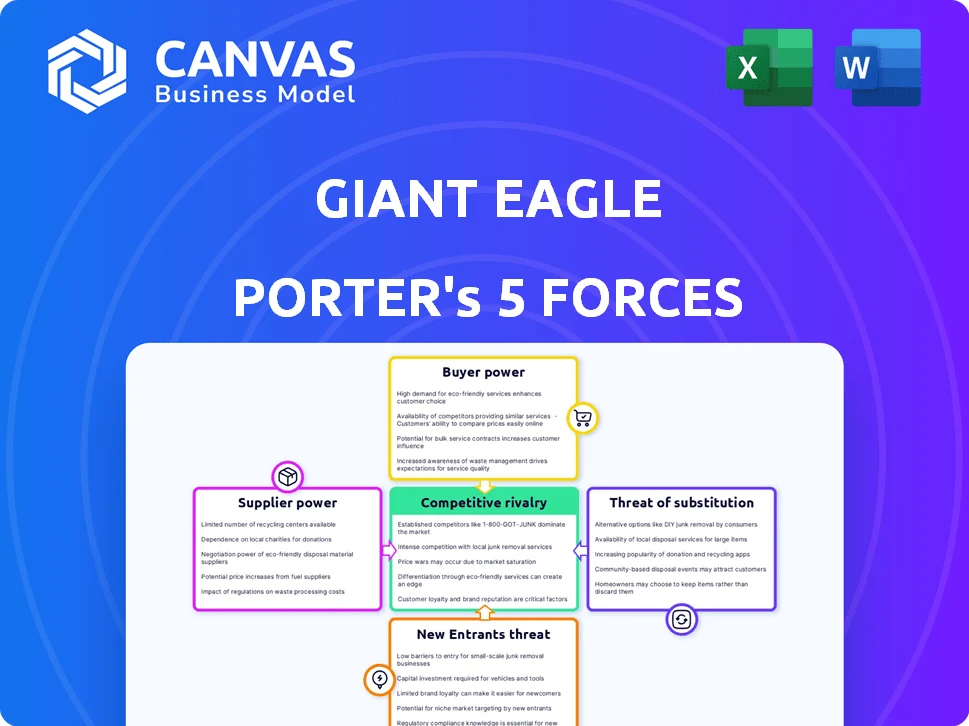
GIANT EAGLE PORTER'S FIVE FORCES TEMPLATE RESEARCH
What is included in the product
 Detailed Word Document
Analyzes Giant Eagle's position, assessing competitive forces like rivalry, suppliers, and buyers.

 Customizable Excel Spreadsheet
Quickly adjust and update your analysis with real-time data—keeping your strategy agile.
Full Version Awaits
Giant Eagle Porter's Five Forces Analysis
This is the complete Porter's Five Forces analysis for Giant Eagle you’ll receive. The preview showcases the entire, ready-to-use document, expertly crafted. You get instant access to this analysis after purchase. No edits needed; it’s ready for your review.

Porter's Five Forces Analysis Template

From Overview to Strategy Blueprint
Giant Eagle faces diverse competitive forces, including strong buyer power due to numerous grocery options. Supplier power is moderate, with some key brands influencing prices. The threat of new entrants is relatively low, offset by the established brand. Substitute products, such as online delivery, pose a growing challenge. Competitive rivalry remains high, particularly within the grocery sector.
This brief snapshot only scratches the surface. Unlock the full Porter's Five Forces Analysis to explore Giant Eagle’s competitive dynamics, market pressures, and strategic advantages in detail.
Suppliers Bargaining Power

Supplier Concentration
Supplier concentration significantly impacts Giant Eagle's costs. When few suppliers control vital products like national food brands, they wield considerable pricing power. For example, major food manufacturers may dictate terms, affecting Giant Eagle's profit margins. This dynamic is visible in the $11.4 billion in revenue Giant Eagle generated in 2023.
Switching Costs
If Giant Eagle faces high switching costs, suppliers gain more leverage. This is often seen with specialized goods or exclusive contracts. For instance, in 2024, grocery retailers with long-term produce contracts faced supplier price hikes. These retailers couldn't easily switch. This situation increases supplier bargaining power.

Supplier Dependence
Suppliers' power hinges on their dependence on Giant Eagle. Those with diverse sales channels or strong brands wield more influence. For example, in 2024, major food brands like Kraft Heinz, with $26.6 billion in net sales, can dictate terms. This is because they are not solely reliant on Giant Eagle's business.

Threat of Forward Integration
The threat of forward integration by suppliers, although not a primary concern for Giant Eagle, is a factor. If suppliers could bypass Giant Eagle and sell directly, their bargaining power would rise. This is more plausible for specialized product suppliers. For example, in 2024, direct-to-consumer sales in the food industry increased by 15%.
- Specialized food manufacturers could establish their own retail presence.
- Increased direct sales reduce reliance on Giant Eagle.
- This enhances suppliers' control over pricing and distribution.
- Threat is moderate but present for certain vendors.
Availability of Substitute Inputs
Giant Eagle's ability to find alternative products impacts supplier power. If Giant Eagle can switch to different suppliers or offer its own brands, suppliers have less leverage. This flexibility in sourcing helps keep costs down and ensures a steady supply of goods. The availability of substitutes is a key factor in Giant Eagle's negotiation strength.
- Private-label brands can constitute up to 20% of a grocery store's sales, offering an alternative to name-brand products.
- Grocery stores often negotiate contracts with multiple suppliers to ensure they have options.
- In 2024, the market share of private-label goods continued to grow, indicating increased availability.
Supplier Dynamics: Impacting Costs
Suppliers' power affects Giant Eagle's costs and profits. Concentrated suppliers, like major food brands, have strong pricing power. Switching costs and supplier dependence also influence this power dynamic. The availability of substitutes and private labels are key for Giant Eagle's leverage.
| Factor | Impact on Giant Eagle | Example (2024 Data) |
|---|---|---|
| Supplier Concentration | High prices, reduced margins | Kraft Heinz (2024 net sales: $26.6B) dictates terms. |
| Switching Costs | Reduced negotiation power | Long-term contracts limit flexibility. |
| Supplier Dependence | Increased supplier influence | Brands with diverse sales channels. |
Customers Bargaining Power

Price Sensitivity
Price sensitivity is high in grocery and convenience, with many competitors and private labels. This forces Giant Eagle to offer competitive prices. For instance, in 2024, the average grocery bill rose, making consumers more price-conscious. Giant Eagle must balance this with costs.
Availability of Information
Customers' bargaining power at Giant Eagle is amplified by readily available information. Online platforms and apps offer price and product comparisons, increasing transparency. This allows shoppers to easily identify the best deals available in the market. In 2024, online grocery sales grew, showing customers use these tools more. This increased consumer awareness directly impacts Giant Eagle's pricing strategies.

Low Switching Costs
Customers of Giant Eagle benefit from low switching costs, as alternatives like Walmart, Kroger, and local stores are readily available. This ease of switching significantly empowers customers. For instance, in 2024, Walmart's grocery sales reached approximately $280 billion, highlighting the competition. This power allows customers to demand better prices and services.

Customer Concentration
Giant Eagle's customer concentration is generally low due to the dispersed nature of individual grocery shoppers. However, shifts in consumer behavior, such as increased demand for organic products, can impact Giant Eagle's decisions. The rise of private-label brands also gives customers more choices, affecting their bargaining power. These changes can influence pricing strategies and product offerings. For instance, in 2024, the organic food market grew, with sales of over $69 billion.
- Consumer preferences significantly shape Giant Eagle's product mix.
- Private-label brands enhance customer bargaining power.
- Market trends like organic food influence strategic decisions.
- Large institutional customers may impact negotiations.
Threat of Backward Integration
The threat of backward integration from Giant Eagle's customers is generally low. Large institutional buyers, like restaurant chains, might consider sourcing directly, but this is uncommon. Individual consumers lack the resources for this. For instance, in 2024, Giant Eagle's revenue was approximately $9.6 billion.
- Large corporate customers could seek alternative suppliers.
- Individual consumers are unlikely to backward integrate.
- Giant Eagle's size makes direct sourcing less appealing.
- The grocery market's complexity limits backward integration.
Giant Eagle's Customer Power: Price, Info, and Options
Customer bargaining power at Giant Eagle is substantial due to price sensitivity and readily available information. Online tools and apps enable consumers to easily compare prices and products, enhancing transparency. Low switching costs further empower customers, as alternatives like Walmart and Kroger are easily accessible.
| Factor | Impact | 2024 Data |
|---|---|---|
| Price Sensitivity | High | Average grocery bill rose |
| Information Availability | Increased transparency | Online grocery sales grew |
| Switching Costs | Low | Walmart's grocery sales: $280B |
Rivalry Among Competitors

Number and Diversity of Competitors
Giant Eagle faces intense competition due to the high number of rivals in the grocery industry. In 2024, Walmart's grocery revenue reached approximately $285 billion, underscoring the competitive pressure. This includes national chains and smaller local stores, which together create a highly fragmented market. The presence of diverse competitors intensifies the battle for market share and customer loyalty.
Industry Growth Rate
The grocery retail sector, including competitors like Giant Eagle, exhibits low to moderate growth, intensifying competition. Convenience retail, a segment of the broader market, has demonstrated recent growth, influencing competitive dynamics. The U.S. grocery market generated about $800 billion in sales in 2024, indicating its maturity. This slow growth rate forces firms to compete aggressively for existing customers.

Product Differentiation
Giant Eagle differentiates itself through product selection, including its Market District stores with gourmet offerings. They also focus on quality, service, and the shopping experience. In 2024, the grocery industry saw a 3.5% increase in sales, driven by consumer demand for unique products. Giant Eagle's private-label sales grew by 8% in 2024, indicating successful differentiation.

Exit Barriers
Exit barriers in the retail sector, like those faced by Giant Eagle, are often high due to significant fixed costs and specialized assets. These factors can trap companies in the market, even when stores are underperforming, intensifying competition. For instance, in 2024, the costs associated with closing a large supermarket could include lease termination fees, employee severance, and asset disposal, potentially reaching millions of dollars. This financial burden can make it more appealing to remain in operation and compete, rather than exit. This leads to a crowded market, pressuring profit margins.
- High fixed costs, such as rent and equipment.
- Specialized assets, like grocery store layouts, limit alternative uses.
- Exit costs can include lease penalties and severance.
- Continued operation is sometimes the lesser financial evil.
Switching Costs for Customers
Switching costs are crucial in determining competitive intensity. Low switching costs allow customers to easily shift to competitors, intensifying rivalry for Giant Eagle. For instance, a 2024 study indicated that consumers are highly price-sensitive, with 60% willing to switch supermarkets for better deals. This means Giant Eagle must constantly compete on price and promotions. The ease of switching increases the pressure to retain customers.
- Price sensitivity drives customers to competitors.
- Promotions and deals are key to customer retention.
- Competition intensifies with easy switching.
- 60% of consumers switch supermarkets.
Grocery Wars: Intense Competition Ahead!
Competitive rivalry is high for Giant Eagle, fueled by numerous competitors in a mature market. The grocery market's 2024 sales of $800 billion highlight the intense competition. Low growth rates and high exit barriers increase the battle for market share. Customer price sensitivity, with 60% switching for better deals, intensifies this rivalry.
| Factor | Impact on Rivalry | 2024 Data |
|---|---|---|
| Market Growth | Low growth intensifies competition | 3.5% industry sales increase |
| Switching Costs | Low costs increase rivalry | 60% of customers switch for deals |
| Exit Barriers | High barriers keep firms in market | Millions in exit costs |
Original: $10.00
-65%$10.00
$3.50Product Information
Product Information
Shipping & Returns
Shipping & Returns
Description
What is included in the product
Detailed Word Document
Analyzes Giant Eagle's position, assessing competitive forces like rivalry, suppliers, and buyers.
Customizable Excel Spreadsheet
Quickly adjust and update your analysis with real-time data—keeping your strategy agile.
Full Version Awaits
Giant Eagle Porter's Five Forces Analysis
This is the complete Porter's Five Forces analysis for Giant Eagle you’ll receive. The preview showcases the entire, ready-to-use document, expertly crafted. You get instant access to this analysis after purchase. No edits needed; it’s ready for your review.
Porter's Five Forces Analysis Template
From Overview to Strategy Blueprint
Giant Eagle faces diverse competitive forces, including strong buyer power due to numerous grocery options. Supplier power is moderate, with some key brands influencing prices. The threat of new entrants is relatively low, offset by the established brand. Substitute products, such as online delivery, pose a growing challenge. Competitive rivalry remains high, particularly within the grocery sector.
This brief snapshot only scratches the surface. Unlock the full Porter's Five Forces Analysis to explore Giant Eagle’s competitive dynamics, market pressures, and strategic advantages in detail.
Suppliers Bargaining Power
Supplier Concentration
Supplier concentration significantly impacts Giant Eagle's costs. When few suppliers control vital products like national food brands, they wield considerable pricing power. For example, major food manufacturers may dictate terms, affecting Giant Eagle's profit margins. This dynamic is visible in the $11.4 billion in revenue Giant Eagle generated in 2023.
Switching Costs
If Giant Eagle faces high switching costs, suppliers gain more leverage. This is often seen with specialized goods or exclusive contracts. For instance, in 2024, grocery retailers with long-term produce contracts faced supplier price hikes. These retailers couldn't easily switch. This situation increases supplier bargaining power.
Supplier Dependence
Suppliers' power hinges on their dependence on Giant Eagle. Those with diverse sales channels or strong brands wield more influence. For example, in 2024, major food brands like Kraft Heinz, with $26.6 billion in net sales, can dictate terms. This is because they are not solely reliant on Giant Eagle's business.
Threat of Forward Integration
The threat of forward integration by suppliers, although not a primary concern for Giant Eagle, is a factor. If suppliers could bypass Giant Eagle and sell directly, their bargaining power would rise. This is more plausible for specialized product suppliers. For example, in 2024, direct-to-consumer sales in the food industry increased by 15%.
- Specialized food manufacturers could establish their own retail presence.
- Increased direct sales reduce reliance on Giant Eagle.
- This enhances suppliers' control over pricing and distribution.
- Threat is moderate but present for certain vendors.
Availability of Substitute Inputs
Giant Eagle's ability to find alternative products impacts supplier power. If Giant Eagle can switch to different suppliers or offer its own brands, suppliers have less leverage. This flexibility in sourcing helps keep costs down and ensures a steady supply of goods. The availability of substitutes is a key factor in Giant Eagle's negotiation strength.
- Private-label brands can constitute up to 20% of a grocery store's sales, offering an alternative to name-brand products.
- Grocery stores often negotiate contracts with multiple suppliers to ensure they have options.
- In 2024, the market share of private-label goods continued to grow, indicating increased availability.
Supplier Dynamics: Impacting Costs
Suppliers' power affects Giant Eagle's costs and profits. Concentrated suppliers, like major food brands, have strong pricing power. Switching costs and supplier dependence also influence this power dynamic. The availability of substitutes and private labels are key for Giant Eagle's leverage.
| Factor | Impact on Giant Eagle | Example (2024 Data) |
|---|---|---|
| Supplier Concentration | High prices, reduced margins | Kraft Heinz (2024 net sales: $26.6B) dictates terms. |
| Switching Costs | Reduced negotiation power | Long-term contracts limit flexibility. |
| Supplier Dependence | Increased supplier influence | Brands with diverse sales channels. |
Customers Bargaining Power
Price Sensitivity
Price sensitivity is high in grocery and convenience, with many competitors and private labels. This forces Giant Eagle to offer competitive prices. For instance, in 2024, the average grocery bill rose, making consumers more price-conscious. Giant Eagle must balance this with costs.
Availability of Information
Customers' bargaining power at Giant Eagle is amplified by readily available information. Online platforms and apps offer price and product comparisons, increasing transparency. This allows shoppers to easily identify the best deals available in the market. In 2024, online grocery sales grew, showing customers use these tools more. This increased consumer awareness directly impacts Giant Eagle's pricing strategies.
Low Switching Costs
Customers of Giant Eagle benefit from low switching costs, as alternatives like Walmart, Kroger, and local stores are readily available. This ease of switching significantly empowers customers. For instance, in 2024, Walmart's grocery sales reached approximately $280 billion, highlighting the competition. This power allows customers to demand better prices and services.
Customer Concentration
Giant Eagle's customer concentration is generally low due to the dispersed nature of individual grocery shoppers. However, shifts in consumer behavior, such as increased demand for organic products, can impact Giant Eagle's decisions. The rise of private-label brands also gives customers more choices, affecting their bargaining power. These changes can influence pricing strategies and product offerings. For instance, in 2024, the organic food market grew, with sales of over $69 billion.
- Consumer preferences significantly shape Giant Eagle's product mix.
- Private-label brands enhance customer bargaining power.
- Market trends like organic food influence strategic decisions.
- Large institutional customers may impact negotiations.
Threat of Backward Integration
The threat of backward integration from Giant Eagle's customers is generally low. Large institutional buyers, like restaurant chains, might consider sourcing directly, but this is uncommon. Individual consumers lack the resources for this. For instance, in 2024, Giant Eagle's revenue was approximately $9.6 billion.
- Large corporate customers could seek alternative suppliers.
- Individual consumers are unlikely to backward integrate.
- Giant Eagle's size makes direct sourcing less appealing.
- The grocery market's complexity limits backward integration.
Giant Eagle's Customer Power: Price, Info, and Options
Customer bargaining power at Giant Eagle is substantial due to price sensitivity and readily available information. Online tools and apps enable consumers to easily compare prices and products, enhancing transparency. Low switching costs further empower customers, as alternatives like Walmart and Kroger are easily accessible.
| Factor | Impact | 2024 Data |
|---|---|---|
| Price Sensitivity | High | Average grocery bill rose |
| Information Availability | Increased transparency | Online grocery sales grew |
| Switching Costs | Low | Walmart's grocery sales: $280B |
Rivalry Among Competitors
Number and Diversity of Competitors
Giant Eagle faces intense competition due to the high number of rivals in the grocery industry. In 2024, Walmart's grocery revenue reached approximately $285 billion, underscoring the competitive pressure. This includes national chains and smaller local stores, which together create a highly fragmented market. The presence of diverse competitors intensifies the battle for market share and customer loyalty.
Industry Growth Rate
The grocery retail sector, including competitors like Giant Eagle, exhibits low to moderate growth, intensifying competition. Convenience retail, a segment of the broader market, has demonstrated recent growth, influencing competitive dynamics. The U.S. grocery market generated about $800 billion in sales in 2024, indicating its maturity. This slow growth rate forces firms to compete aggressively for existing customers.
Product Differentiation
Giant Eagle differentiates itself through product selection, including its Market District stores with gourmet offerings. They also focus on quality, service, and the shopping experience. In 2024, the grocery industry saw a 3.5% increase in sales, driven by consumer demand for unique products. Giant Eagle's private-label sales grew by 8% in 2024, indicating successful differentiation.
Exit Barriers
Exit barriers in the retail sector, like those faced by Giant Eagle, are often high due to significant fixed costs and specialized assets. These factors can trap companies in the market, even when stores are underperforming, intensifying competition. For instance, in 2024, the costs associated with closing a large supermarket could include lease termination fees, employee severance, and asset disposal, potentially reaching millions of dollars. This financial burden can make it more appealing to remain in operation and compete, rather than exit. This leads to a crowded market, pressuring profit margins.
- High fixed costs, such as rent and equipment.
- Specialized assets, like grocery store layouts, limit alternative uses.
- Exit costs can include lease penalties and severance.
- Continued operation is sometimes the lesser financial evil.
Switching Costs for Customers
Switching costs are crucial in determining competitive intensity. Low switching costs allow customers to easily shift to competitors, intensifying rivalry for Giant Eagle. For instance, a 2024 study indicated that consumers are highly price-sensitive, with 60% willing to switch supermarkets for better deals. This means Giant Eagle must constantly compete on price and promotions. The ease of switching increases the pressure to retain customers.
- Price sensitivity drives customers to competitors.
- Promotions and deals are key to customer retention.
- Competition intensifies with easy switching.
- 60% of consumers switch supermarkets.
Grocery Wars: Intense Competition Ahead!
Competitive rivalry is high for Giant Eagle, fueled by numerous competitors in a mature market. The grocery market's 2024 sales of $800 billion highlight the intense competition. Low growth rates and high exit barriers increase the battle for market share. Customer price sensitivity, with 60% switching for better deals, intensifies this rivalry.
| Factor | Impact on Rivalry | 2024 Data |
|---|---|---|
| Market Growth | Low growth intensifies competition | 3.5% industry sales increase |
| Switching Costs | Low costs increase rivalry | 60% of customers switch for deals |
| Exit Barriers | High barriers keep firms in market | Millions in exit costs |










